TL;DR (Too Long; Didn't Read)
Crayon’s homepage is a meta-narrative maneuver where they stop acting like a neutral vendor and start acting like a fellow competitor in the trenches. Instead of hiding rivals behind vague terms like "legacy solutions," they explicitly acknowledge the crowded market with the bold claim, "we beat our competitors, you can too," effectively turning their own positioning into a live demonstration of the product's promise.
Company Profile
Crayon is a competitive-intelligence platform that continuously
monitors your rivals’ digital footprint from websites, pricing,
messaging, news and more to surface changes.
Their software uses AI and automation, it filters the noise
and turns raw data into battlecards, alerts and dashboards that
your sales and product teams can use.
How Crayon Know What You Need to Close the Deal
The most interesting part of Crayon’s messaging is how little effort they spend trying to convince you that competitive intelligence matters. They assume you already know that. They assume you’ve already felt the pain of scattered screenshots, Slack threads, bookmarked pages, forgotten competitor docs, and sales reps asking, “Do we have anything on this?” five minutes before a call.
Instead of introducing the problem, Crayon validates it. They speak in the language of people who have already gone through five or six versions of trying to fix competitive intel manually and failed.
For the above fold section, they lead with the outcome “drive more competitive wins” their solution helps you achieve and how the solution works towards this outcome. It is pretty straightforward.
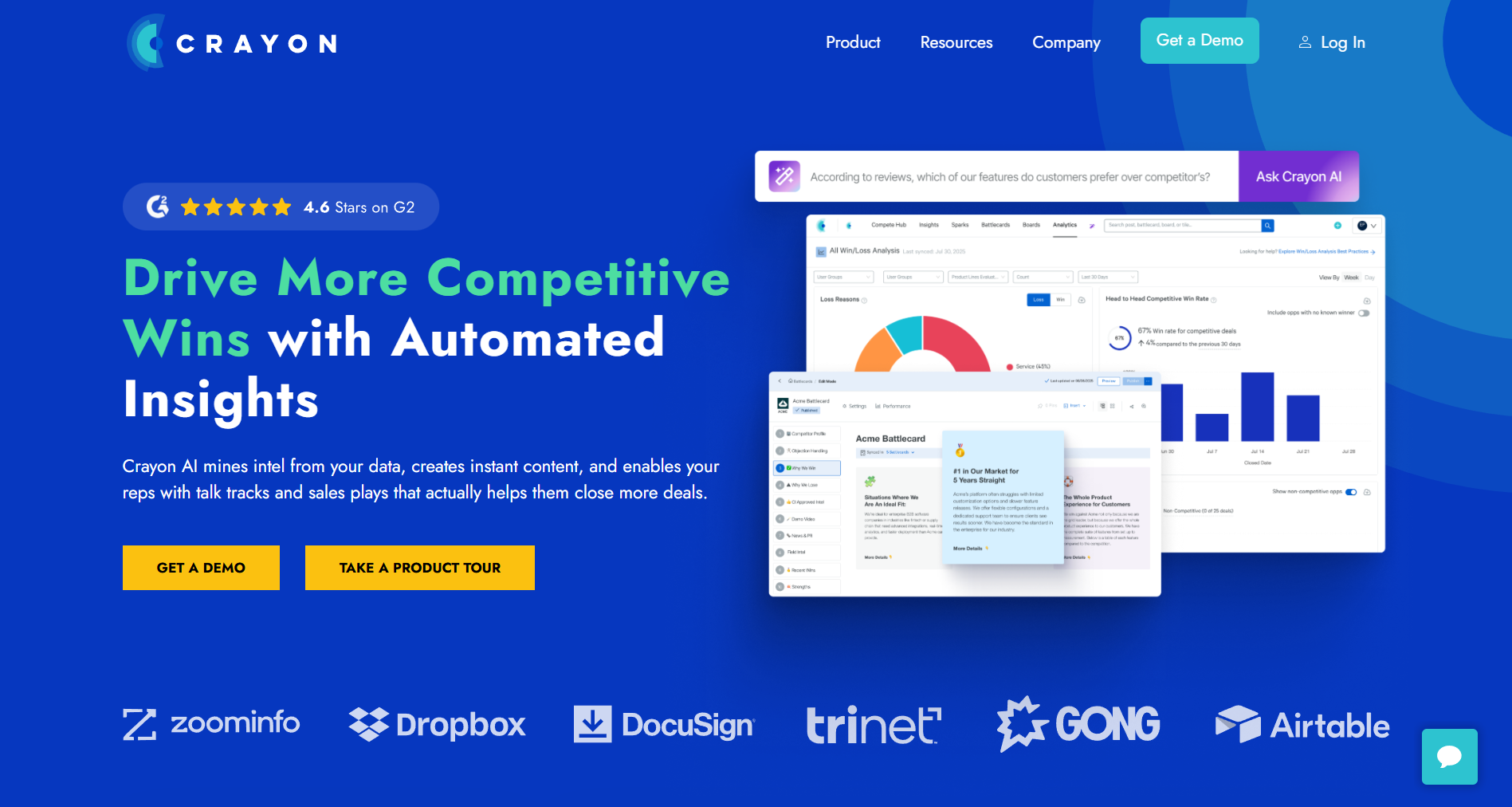
After the hero section, they go strong on social proof and results. The homepage is built for buyers already comparing tools, not buyers who are still discovering the category. That’s why the logos, quotes, and case studies show up right after the hero section. Crayon understands the buyer’s mental state: they’re not asking “Why competitive intelligence?” They’re asking, “Which CI tool should we choose?” And for a buyer in that phase, proof is not an ending, it’s an entry point.
This approach can be used especially when your category is mature, you have established competitors on the market and you understand who you are competing against from a buyer’s perspective. This couldn’t work in a new emerging category where you need to educate your buyers about the problem and your solution.
The problem they are fixing
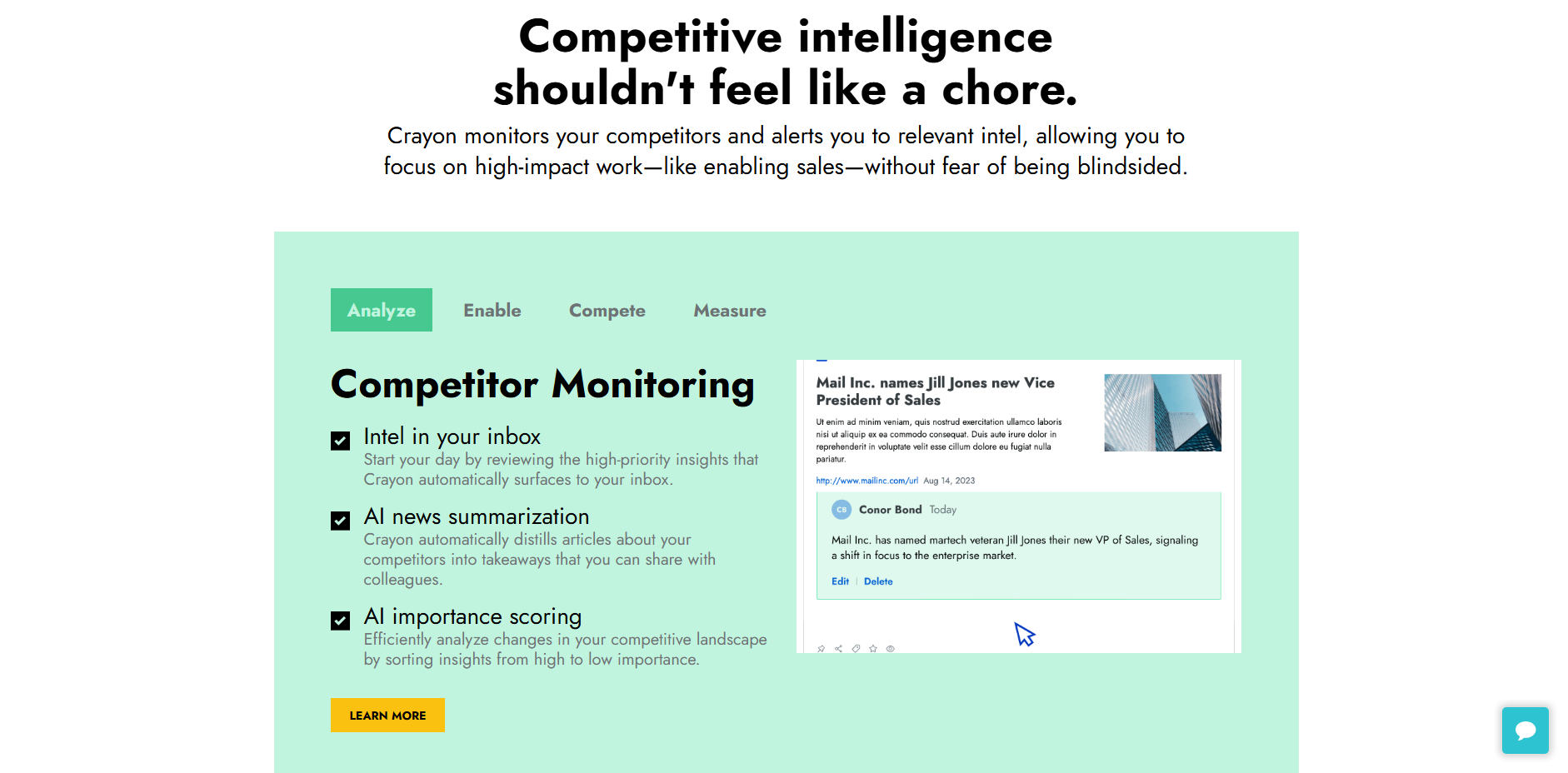
I see sections on B2B websites where they just drop features and it feels like they just give them to you and you need to figure out if you need them or not. Crayon resists this. Instead of overwhelming the prospect with a sea of possibilities, they use feature categorization to lower the cognitive load based on the actions you can do with their software.
The narrative flow acknowledges the current state of the buyer immediately. Most prospects arriving at this page are currently acting as human web scrapers—copy-pasting updates into spreadsheets and taking screenshots.
Crayon validates this experience. They present the current reality not just as inefficient, but as a "chore." This word choice is deliberate. It strips the glamour away from manual CI work. It tells the Product Marketer or Strategist: "We know you are doing grunt work when you should be doing strategy."
They are telling the buyer: "We know how you work. You Capture, You Analyze, You Act." This builds trust because it shows they understand the job, not just the code.
Crayon Knows Exactly Who It’s Up Against
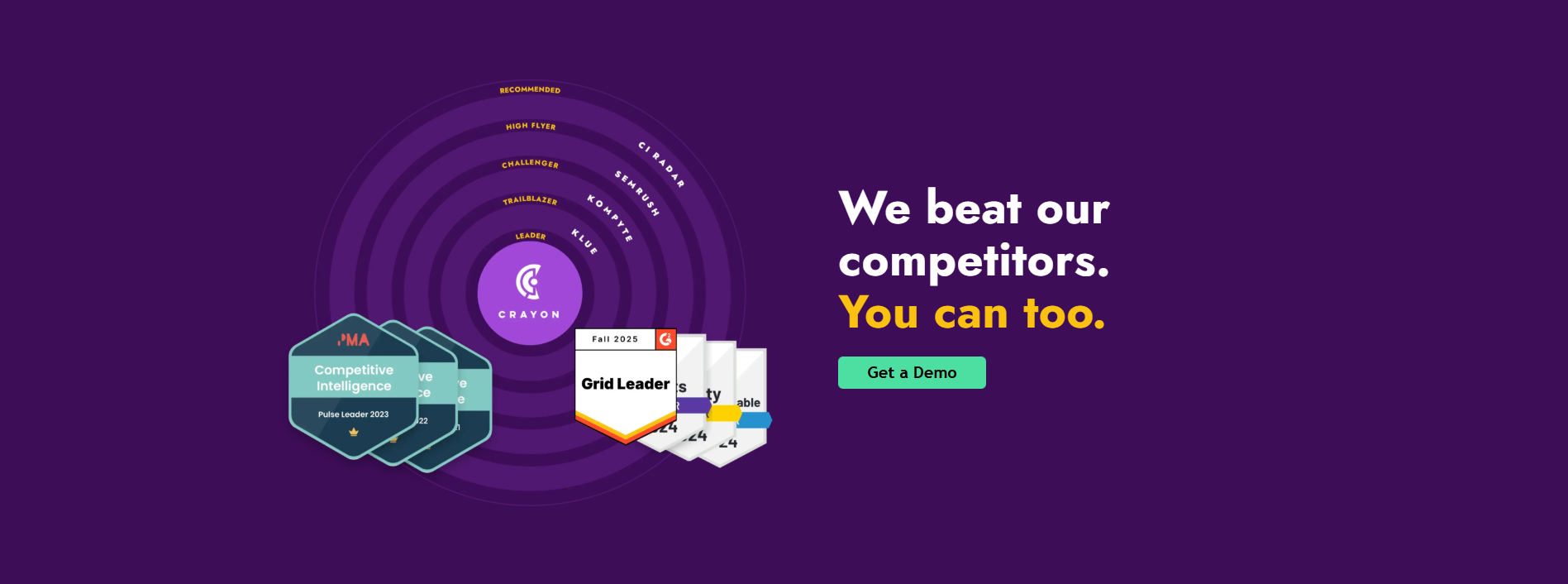
This final section is the reason I wanted to write about Crayon in the first place. The homepage closes with a straightforward call to action, but what makes it stand out is how directly they acknowledge the competitive landscape. When they say “we beat our competitors, you can too,” they put themselves in the exact same context their buyers want to get a CI solution in the first place. They aren’t hiding the competition under names like “legacy tools” or “traditional solutions”, they describe the market the way their buyers actually experience it.
And it is bold. In just a couple of lines and a simple graphic, they make it obvious that they know exactly who they’re up against and that their buyers know it too. Given that Crayon’s homepage speaks primarily to bottom-of-funnel visitors—people already comparing vendors—it makes complete sense to be this direct. At that stage, the buyer is scanning the page with one question in mind: “Why you and not the other one?” Crayon answers it without hesitation and in a very incisive way.
It becomes a very meta moment. Crayon positions itself not as an outsider describing the competitive environment but as a company competing inside it. They play the same game their buyers play and they have the solution to win the competitive intelligence game.
Actionable Takeaways for the Marketer
- If you are in a mature category where the problem is well-known, do not waste real estate educating the buyer on why they need a solution. Audit your hero section. If you are explaining a concept your buyer already understands, cut it. Pivot immediately to the outcome (e.g., "drive more competitive wins") and how you achieve it.
- Instead of generically introducing a problem, describe the specific, painful reality of the buyer whether that’s the manual "chore" of their workflow or the limitations of the rival tool they want to replace. Validate their struggle to prove you are an insider who understands the job.
- For buyers in the comparison phase, proof is a prerequisite for engagement, not just a closer. Put it at the forefront of your homepage.
- In a competitive market, acknowledge the landscape directly rather than pretending you are the only solution. If you are competing for bottom-of-funnel traffic, answer the question "Why you and not the other one?" directly on the homepage.
- Categorize Features by "Job to Be Done". Avoid the "feature dump" that forces the user to figure out if they need the tool. Group your features into 3-4 distinct pillars based on the workflow or outcome (e.g., Capture, Analyze, Act) rather than technical functionality. This shows you understand how they work.

About the Author
Raluca is the the co-founder of Whale of the Web. She specializes in B2B website messaging and copywriting. In the past she helped B2B brands integrate content-first approaches to their online presence and marketing campaigns.